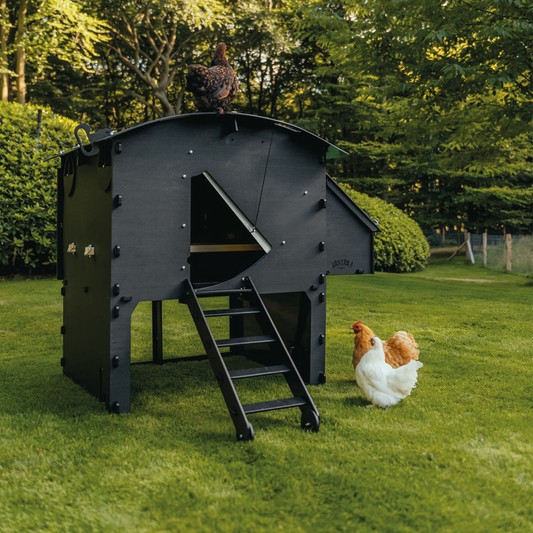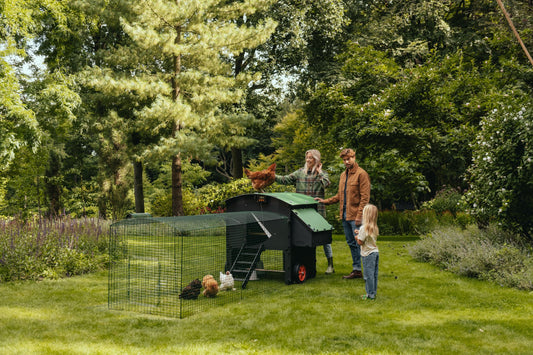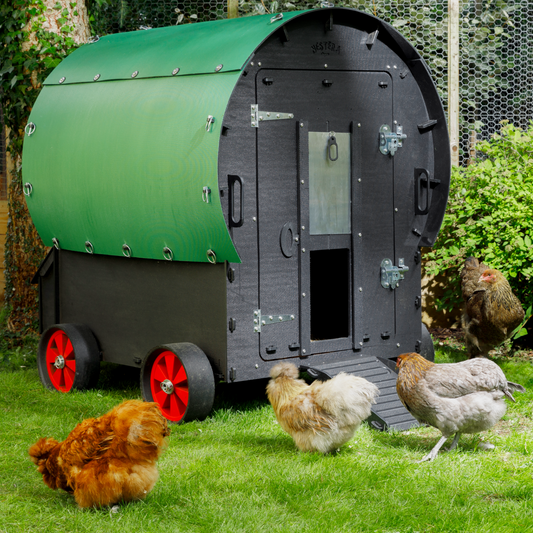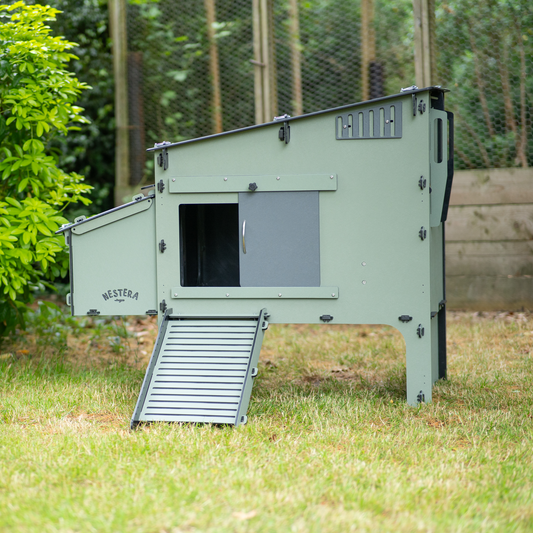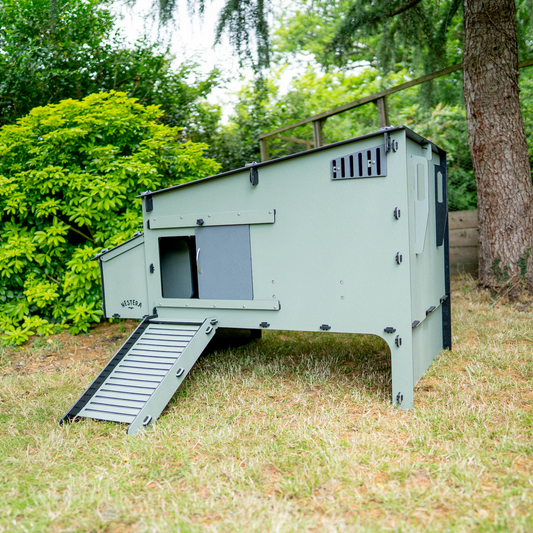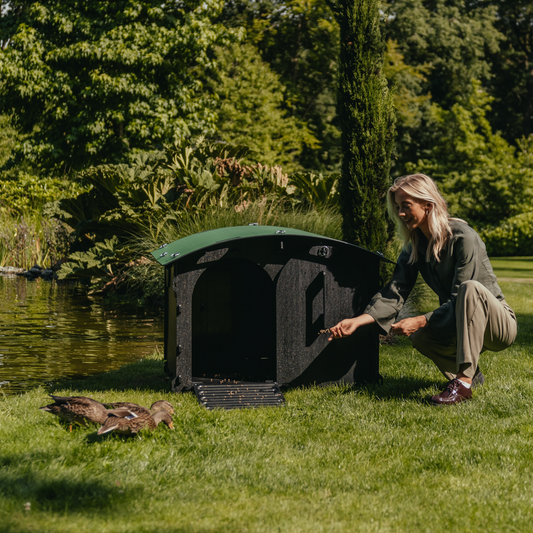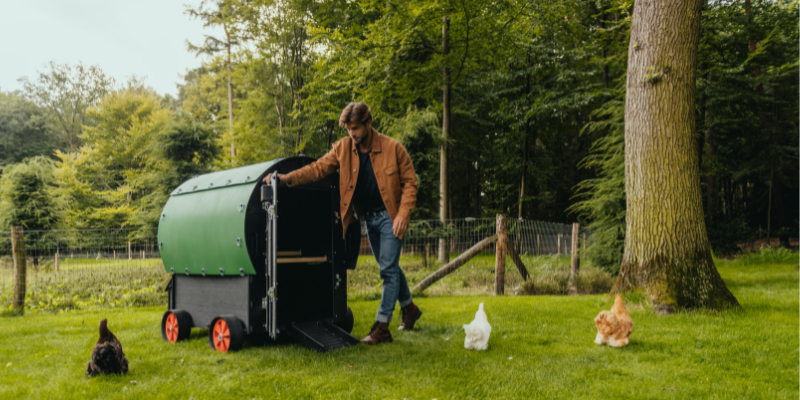
Wondering what time chickens should go in the coop? The short answer is simple: chickens take themselves to bed at dusk, so the real job for you is shutting them in safely once they have all gone inside. Get the timing right and you keep your flock protected from the predators that come out after dark, without having to chase a single hen.
Short answer: chickens go into the coop naturally at dusk. Lock the pop-hole door once every bird has settled on the perch — at, or just after, last light — and open it again at dawn.
What time should chickens go in the coop?
Chickens roost on their own as the light fades each evening, so you rarely need to "put" them in at all — you simply need to secure the door behind them. A change in light level triggers your hens to find somewhere safe to settle. They have a natural light sensor in their brains that recognises the shift from day to dusk, which is why a settled flock will troop into a familiar coop without any prompting.
The key is to close the door after the last bird has gone in. Do it too early and you risk shutting one out for the night; do it too late and you leave a window for foxes and other predators. Aim to lock up at dusk or just after, once the coop is quiet and every hen is on the perch. In practice that means a quick head-count at last light, then sliding the door shut.
When do chickens go to bed (and why dusk matters)?
Chickens go to bed at dusk because millions of years of evolution have taught them that they do not fare well against nocturnal predators. For all you Charles Darwin fans, this makes complete sense: historically, the birds that roosted at dusk — before night-time hunters emerged — lived long enough to produce offspring who inherited the same instinct. Hens that stayed at ground level after dark soon became an easy meal, so that trait was bred out.
If your hens have a coop they are accustomed to, they will head to bed at dusk automatically, and you won't need to herd them in. New birds are the exception. They often need help at first, until they learn that the coop is their safe place. If you have just brought hens home and they are reluctant to go in, our guide on why your chickens won't go into their new coop walks through training a new flock into the bedtime routine — most settle within a few days, though some take up to a week.
Interestingly, hens from white egg-laying strains (like leghorns) are much more likely to fly up into a tree to roost if no coop is available, thanks to their strong wings. Heavier brown-egg layers are less built for flight and tend to huddle together closer to the ground.

How dusk shifts through the seasons
The single biggest challenge with a fixed lock-up time is that dusk is a moving target. In midsummer your hens may not settle until well after 9pm, while in deep winter they can be on the perch by 4pm. A clock-based routine quickly falls out of step with the sun, which means you are either standing in the garden waiting or, worse, locking up before everyone is in.
This is exactly why a "best time to lock up chickens at night" is better defined by the light than by the clock. Follow the dusk, not the hour, and adjust as the days lengthen and shorten across the year. For colder evenings, our guide on how chickens stay warm in winter explains why a snug, well-secured coop matters even more when nights draw in early.
Securing the coop at night: the role of an automatic door
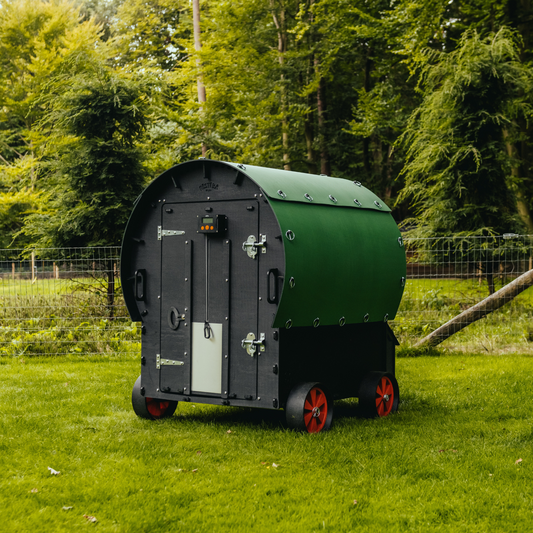
Although your chickens may enter the coop at exactly the right time, they are not safe until the door is closed. This is where an automatic door opener earns its keep, securing your hens at night and releasing them again at dawn — even when you are out, away, or simply enjoying a lie-in.
Most units can be operated in three ways: manually at the press of a button, automatically with a light (lux) sensor, or automatically on a timer. We always recommend the light sensor, because it tracks dusk and dawn naturally and adjusts itself as sunrise and sunset shift through the year — no reprogramming required. The Nestera Automatic Door Opener offers all three modes, and you can read more about the wider benefits in our article on the benefits of an automatic door for chicken coops.

A light-sensor door gives your flock the maximum protection at night and the greatest access to natural daylight by day. The more daylight they receive, the more eggs you'll get and the healthier they will be: sunlight regulates their circadian rhythm and helps them absorb calcium via vitamin D, which supports bone, feather and eggshell production. Just remember that it always remains your responsibility to check every hen is in and the door is safely shut.
Why would chickens roost outside instead of going in?
Chickens that were once happy to head into the coop at dusk but suddenly want to roost outside may be telling you something is wrong inside. One common culprit is poultry red mite — nocturnal parasites that live in the coop and feed on your hens' blood at night, causing discomfort, anaemia and reduced egg production. Their short life cycle means a few can become thousands in just weeks. To test for them, place a hot water bottle filled with hand-hot water in the nest box, leave it 10 minutes, then inspect: red mites are drawn to warmth and the carbon dioxide in your flock's breath, so any present will be easy to spot.

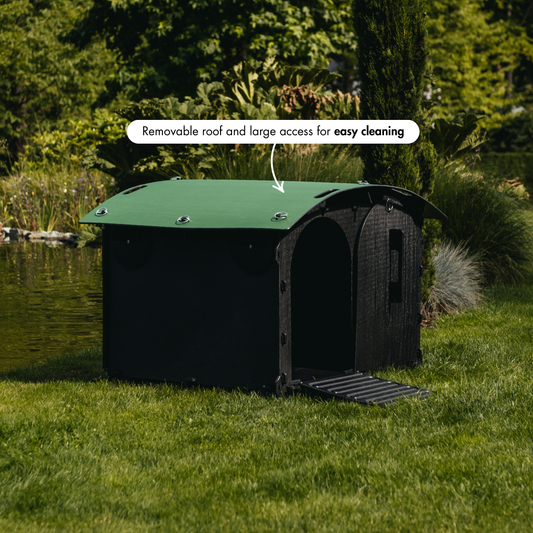
Never jet-wash a coop to shift red mite — despite their tiny size, they crawl back surprisingly fast. Hot, soapy water is far more effective, as these parasites cannot survive above 45°C. They love to hide under felt roofs, where two pieces of timber meet, or inside blown-plastic structures, which is one reason we designed our recycled-plastic coops with easy red-mite management in mind: smooth surfaces and no cracks for them to shelter in. (For treatment or signs of illness, always defer to your vet or a qualified poultry specialist.)
Occasionally hens choose to sleep out simply because the coop is too warm on a hot night. Letting them roost al fresco is extremely dangerous — they are highly likely to be predated. Make sure the coop is sited in shade with ventilation fully open, and on sweltering nights add a couple of plastic bottles three-quarters filled with frozen water to act as a heat sink. Once the coop has cooled to a comfortable temperature, encourage your hens in, lifting them onto the perch if you need to.
Frequently asked questions
What time do chickens roost at night?
Chickens roost at dusk, as the light fades. The exact time changes with the seasons — as late as 9–10pm in midsummer and as early as 4pm in winter — so follow the light rather than a fixed clock time.
Should I lock my chickens in every night?
Yes. Even a flock that puts itself to bed is not safe until the pop-hole door is closed. Locking up every night, at or just after dusk, is the single most important thing you can do to protect them from foxes and other predators.
Do chickens go into the coop on their own?
Established hens almost always do, drawn in by the falling light. New birds usually need a few days of gentle help to learn the routine — see our guide on getting chickens into a new coop if yours are hesitant.
What is the best way to lock up chickens automatically?
A door opener with a light sensor is ideal, because it follows dusk and dawn naturally and adapts as the seasons change. The Nestera Automatic Door Opener handles this for you while still letting you open and close manually whenever you wish.
Let your coop handle bedtime
Your hens already know what time to go in — the part worth automating is shutting the door safely behind them, every single night. Pair a hard-wearing, easy-clean Nestera recycled-plastic chicken coop with the Automatic Door Opener and its light sensor will track dusk through every season, keeping your flock secure while you get on with your evening. Happy chicken keeping!