Choosing the best duck breeds for beginners is the easiest way to set yourself up for a happy, low-stress start in backyard duck keeping. Ducks are generally hardier and more forgiving than chickens, so the right breed will reward you with reliable eggs, friendly company and very little fuss. Below are eight easy duck breeds to keep, with the temperament, egg production, size and beginner appeal of each.
Short answer: if you want a friendly, productive first duck, start with a Khaki Campbell, Welsh Harlequin or Pekin. All three are hardy, good-natured and forgiving of beginner mistakes.
How to choose a duck breed as a beginner
Before you fall for a particular look, think about what you actually want from your flock. Ask yourself three quick questions:
- Eggs or pets? Some breeds are prolific layers (great for a steady egg supply), while others are calmer and better suited as friendly garden companions.
- How much space and how many? Most beginners do best with a small group of three to six ducks. Ducks are social, so always keep at least two or three together.
- Town or country? If you have close neighbours, quieter breeds such as the Muscovy keep the noise (and the complaints) down.
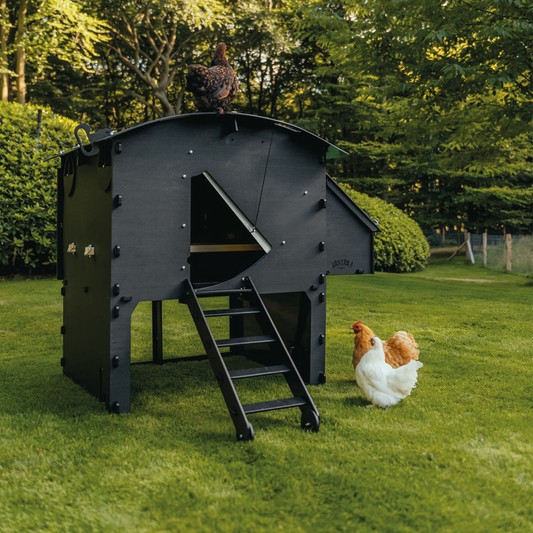
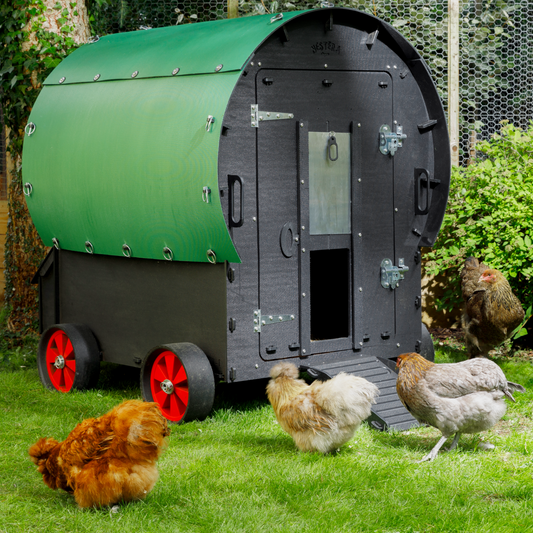
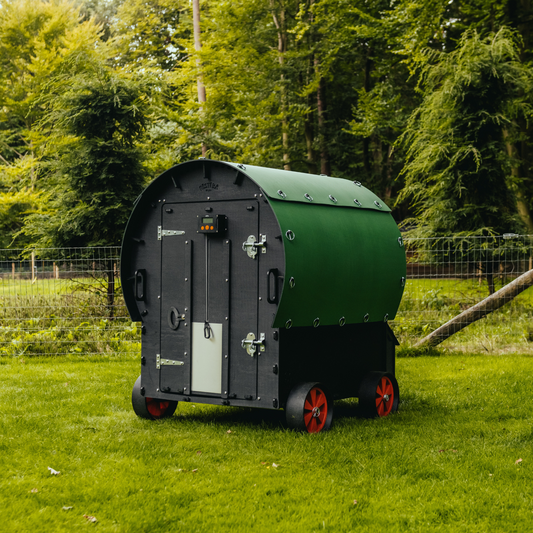
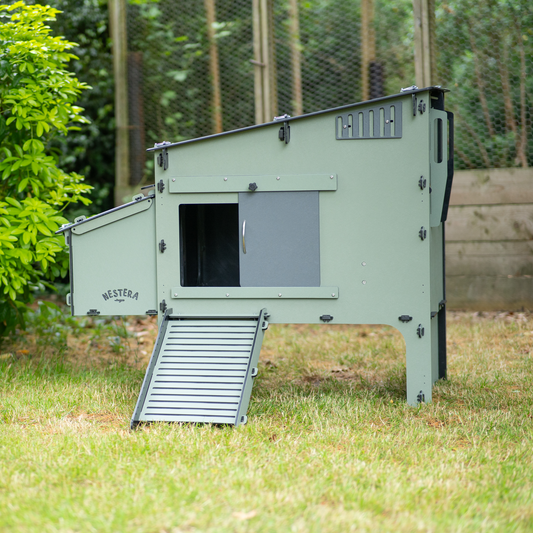
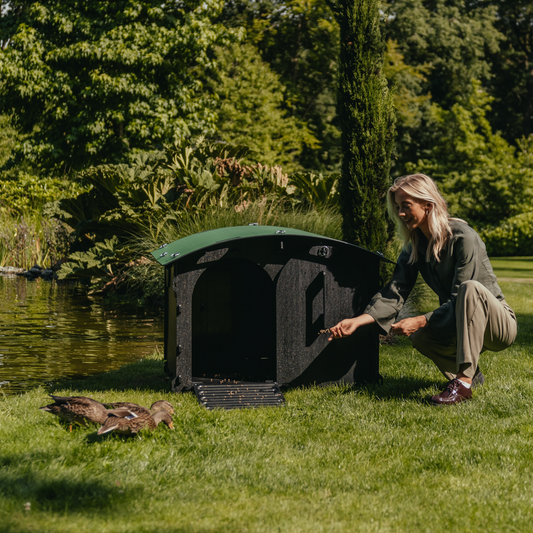
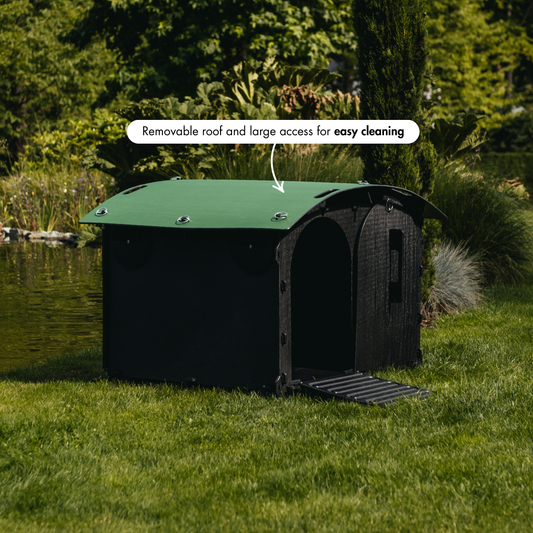
Whichever breed you choose, ducks need a dry, predator-safe place to sleep at night. Our easy-clean Nestera Duck House gives a small starter flock a safe, spacious and low-maintenance home, with smooth recycled-plastic surfaces that wipe clean in minutes and leave no cracks for pests to hide in. For the full picture on housing, feeding and daily care, read our beginner's guide to keeping ducks before you bring any birds home.
The 8 best duck breeds for beginners
1. Khaki Campbell – the best all-round beginner duck

Why they’re great for beginners: Khaki Campbells are hardy, adaptable to most climates and prolific egg layers, producing up to 300 eggs a year. They are friendly but independent, which makes them easy to manage as a first duck.
- Temperament: Curious and active, but not overly demanding
- Egg production: 250–300 eggs per year
- Size: Medium (roughly 2–2.3 kg)
2. Pekin – a calm, friendly duck breed for families

Why they’re great for beginners: Pekins are calm, gentle and easy to handle. They grow quickly and are often kept for meat, but they also lay reliably and make fun, sociable pets – a great choice if children are involved.
- Temperament: Social and gentle
- Egg production: 200–280 eggs per year
- Size: Large (roughly 3.5–4 kg)
3. Call Duck – a small, playful breed for limited space

Why they’re great for beginners: Small, playful and friendly, Call Ducks are perfect for limited space. Their distinctive, high-pitched quack and entertaining behaviour make them a joy to watch – just be aware they can be noisy, so they suit a country garden better than a packed terrace.
- Temperament: Sociable, curious and comical
- Egg production: 150–200 eggs per year
- Size: Small (under 0.7 kg)
4. Muscovy – the quietest duck breed for towns and suburbs

Why they’re great for beginners: Muscovies are far quieter than most duck breeds, which makes them ideal for suburban or urban settings. They are hardy, low-maintenance and adaptable, and they happily forage for much of their own food.
- Temperament: Calm, independent, sometimes aloof, but still friendly
- Egg production: 150–250 eggs per year
- Size: Large (females ~3 kg, drakes up to 5 kg)
5. Cayuga – a hardy, striking duck for cold climates

Why they’re great for beginners: Cayugas are cold-hardy, easy to care for and excellent foragers. Their glossy, iridescent black feathers add real beauty to a flock, and they are friendly and calm in temperament.
- Temperament: Friendly, calm and low-maintenance
- Egg production: 150–200 eggs per year
- Size: Medium (roughly 3–3.5 kg)
6. Welsh Harlequin – a gentle, reliable laying duck

Why they’re great for beginners: Welsh Harlequins are gentle, social and excellent layers. Hardy in a variety of climates, they are easy to care for and a reliable choice for new duck owners who want both eggs and friendly birds.
- Temperament: Gentle, social and playful
- Egg production: 250–300 eggs per year
- Size: Medium (roughly 2–2.5 kg)
7. Indian Runner – the best duck breed for eggs and free-ranging

Why they’re great for beginners: Indian Runners are incredibly productive egg layers, hardy and entertaining to watch as they stand upright and waddle around the garden. They thrive in free-range environments and need minimal maintenance.
- Temperament: Energetic, inquisitive and friendly
- Egg production: 250–350 eggs per year
- Size: Medium (roughly 1.4–2.3 kg)
8. Buff – an affectionate, easygoing backyard duck

Why they’re great for beginners: Buff Ducks are calm, affectionate and easy to handle. They are hardy, excellent foragers and adapt well to varied weather, which makes them ideal for a relaxed backyard flock.
- Temperament: Calm, gentle and easygoing
- Egg production: 150–200 eggs per year
- Size: Medium-large (roughly 3–3.5 kg)
Housing your new ducks
Once you’ve picked your breed, the next step is somewhere safe for them to sleep. For most beginners, a small flock of three to six ducks is the sweet spot – big enough to keep each other company, small enough to manage easily. The Nestera Duck House comfortably houses a starter flock of this size, and because it’s made from 70% recycled plastic with smooth, crack-free surfaces, there’s nowhere for red mites or damp to take hold. It hoses down in minutes, which matters a lot with ducks – they’re wonderfully messy birds.
One last tip before you mix species: if you already keep hens, think carefully about whether to house them with your ducks. Read 6 reasons why you shouldn’t keep chickens and ducks together before combining your flocks.
Frequently asked questions
What is the best duck breed for beginners?
The Khaki Campbell is widely regarded as the best all-round duck for beginners: it’s hardy, friendly and lays up to 300 eggs a year. Welsh Harlequins and Pekins are equally forgiving and good-natured first choices.
Which duck breeds lay the most eggs?
For sheer numbers, Indian Runners (up to 350 a year), Khaki Campbells and Welsh Harlequins (250–300 a year) are the best duck breeds for eggs and ideal if a steady supply is your main goal.
How many ducks should a beginner start with?
Ducks are highly social, so never keep just one. A starter flock of three to six ducks is perfect for most beginners – sociable, productive and easy to house in a single Nestera Duck House.
Are ducks easier to keep than chickens?
Many beginners find ducks easier: they’re generally hardier, more weather-resistant and less prone to some of the parasites that affect hens. They do need access to water for dabbling and a dry, clean shelter at night.
Ready to start your flock?
Whichever of these beginner-friendly duck breeds wins you over – a prolific Khaki Campbell, a gentle Pekin or a striking Cayuga – the secret to an easy start is good housing. Give your new ducks a warm, dry and easy-clean home with the Nestera Duck House, and you’ll spend less time cleaning and more time enjoying your flock.